Virtual Reality Therapy at Abingdon Care & Rehabilitation Center

Virtual reality therapy at AristaCare is an immersive rehabilitation treatment that uses provider-led VR technology to help patients improve mobility, daily living activities, and overall wellness through personalized sessions. As the pioneering skilled nursing and rehab company in New Jersey to introduce Virtual Reality as a therapy modality, AristaCare continues to use innovative tools to support stronger patient outcomes for adults recovering from physical injuries, neurological conditions, chronic pain, mental health challenges, and for seniors or others with mobility limitations seeking advanced rehabilitation in Green Brook.


With the revolutionary REAL y-Series™, developed in collaboration with rehabilitation experts, patients engage in full-body VR immersion that extends conventional rehab with goal-oriented exercises tailored to each recovery plan. This page explains how virtual reality therapy works, which conditions it can address, what sessions are like, how it fits with traditional rehabilitation, whether it is safe and accessible for seniors, the mental health benefits it can offer, what insurance may cover, and how it compares with conventional therapies. AristaCare’s approach makes rehabilitation more engaging and efficient, helping many patients stay motivated, accelerate healing, and work toward optimal recovery with care shaped to their individual goals.
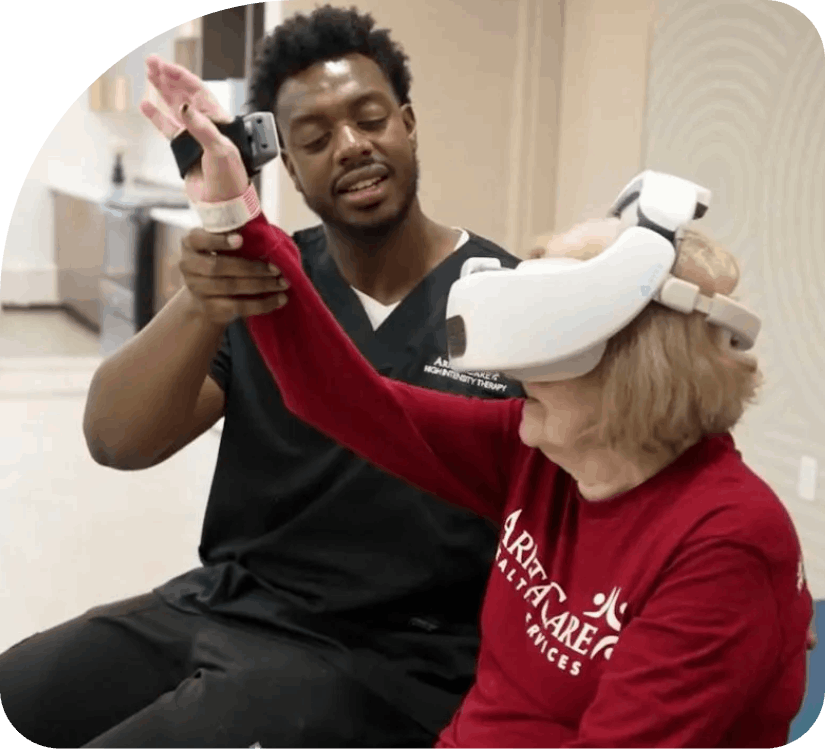
Man in black scrubs helping a seated woman wear a white VR headset in a bright room

Frequently Asked Questions about Virtual Reality Exposure Therapy at Abingdon Care and Rehabilitation


  • What conditions can Virtual Reality Therapy at Abingdon Care treat?

    Our VR therapy programs are designed to assist patients recovering from physical injuries, neurological conditions, and those managing chronic pain. It also supports mental health care by helping with anxiety disorders, post-traumatic stress disorder, and improving social communication skills.

  • How does Virtual Reality Therapy enhance rehabilitation?

    VR therapy uses computer-based simulation in a virtual environment to recreate real-life scenarios; in rehabilitation, this approach was described as virtual rehabilitation when the term was coined in 2002. This approach can improve mobility, pain management, and daily living activities more effectively than traditional rehabilitation services.

  • Is Virtual Reality Therapy safe for seniors and those with limited mobility?

    Yes, VR therapy at Abingdon is tailored to each individual's needs and physical capabilities. The technology allows patients to participate in therapy safely from a seated or supported position, making it accessible for seniors and those with mobility challenges who may already receive long-term nursing and memory care. Some people may experience cybersickness, so sessions should be adjusted and monitored by clinicians.

  • How do healthcare professionals at Abingdon integrate VR therapy into patient care?

    Our therapists and clinicians use virtual reality technology as a complement to conventional rehabilitation techniques and broader specialized medical programs. The platform includes tools for customization and tracking, and therapists adjust each session based on patient goals for optimal outcomes. Building VR programs requires time, money, and expertise. VR content must be rigorously tested before real world use. Lack of training means only 1% of psychologists currently use VR for treatment, which limits wider adoption in psychology and psychiatry.

  • Can Virtual Reality Therapy help with mental health issues?

    Absolutely. Virtual reality therapy can support care for mental illness more broadly, including anxiety, depressive symptoms, and certain phobias through controlled exposure, aligning with our broader resources for senior care, guides, and support. Virtual reality exposure therapy has been used since the 1990s to treat anxiety disorders. For example, a virtual environment can simulate fear triggers such as flying or public speaking so patients can treat anxiety in a controlled setting. It can also support care for trauma, depression, eating disorders, and body dysmorphia, and may be explored for other disorders including psychotic disorders under professional supervision. Researchers found that virtual reality exposure therapy reduced PTSD symptoms by 50%. In a separate VR study, 85% of participants no longer met PTSD criteria. In clinical trials, colleagues tested vr interventions against a control group and reported a benefit for some patients alongside standard medication. Support from a national institute has also helped strengthen confidence in this area of medicine.

  • What should I expect during a VR therapy session at Abingdon?

    Patients use a computer-driven system and wear headsets that can track head and eye movements to strengthen presence while they engage in guided exercises or simulations led by trained therapists. Some programs also simulate social tasks for patients with low confidence, including autism-related social communication practice where appropriate. Sessions are designed to be immersive yet comfortable, reflecting our broader Quality Experience program focused on personalized care, encouraging active participation while therapists provide support and adjust difficulty levels as needed.

  • Is Virtual Reality Therapy covered by insurance at Abingdon Care?

    Coverage varies by insurance provider and plan. Our admissions team can assist patients and families in understanding benefits and exploring options to include VR therapy as part of a comprehensive care and rehabilitation program at Abingdon. Cost and accessibility can still be barriers for some patients and families.

  • How does VR therapy at Abingdon differ from traditional rehabilitation?

    VR therapy offers an interactive, motivating experience that can accelerate recovery by combining physical and cognitive training in a virtual world, complementing our newly renovated post-hospital rehab unit in Green Brook. It also allows for precise tracking of progress and can be adapted to simulate real-world activities, enhancing transfer of skills to everyday life much like our structured therapeutic recreation and memory support at Nostalgia Park. This gives these approaches practical value because practiced skills can carry over into daily routines outside therapy.

Embrace the Future of Mental Health Healing with Virtual Reality Therapy


Experience the transformative benefits of Virtual Reality Therapy at Abingdon Care and Rehabilitation. Contact us today to learn how our innovative VR programs can support your recovery journey and help you achieve your rehabilitation goals. Embrace the future of care with personalized, engaging therapy designed just for you—because at Abingdon, your best recovery starts here.

Follow Us On Social Media!

#AristaCARES